
Key Takeaways
Changes in shift times, work locations and team sizes can affect how you plan bus services.
Reviewing passenger numbers and pickup times can help you identify when routes or bus capacity need adjusting.
Using only the information needed for transport planning helps protect employee privacy without unnecessarily tracking individuals.
Reviewing passenger demand after changing routes or schedules helps ensure transport arrangements continue to meet your workforce’s needs.
When your workforce changes sites, shifts or headcounts, yesterday’s bus schedule may no longer fit. At A&S Transit, we see worker movement data as a practical planning aid: boarding volumes, pickup patterns and reporting times help us ask questions about transport demand. Our goal is smoother journeys, not employee monitoring.
We distinguish occupational mobility between jobs or sectors from daily commuting. Labour trends provide context, but your rosters, shifts and sites determine bus requirements.
How We Read Worker Movement Data in Context
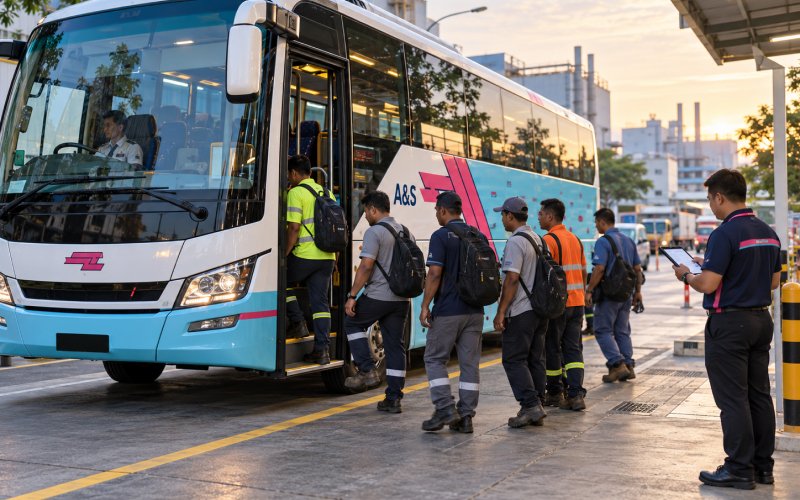
We start with an operational question: are people reaching the correct site in time for their shift? A busy pickup point could indicate an expanded crew, a revised roster or temporary project work. Lower boarding numbers might mean workers have been reassigned elsewhere.
Useful records include passengers per stop, planned versus actual boarding times, destination demand and recurring peaks. We compare them with your deployment list before recommending changes. For a recurring worker transport arrangement, this prevents a single quiet morning from driving an unnecessary route revision.
How Occupational Mobility Relates to Workforce Transport Demand
We treat occupational mobility in Singapore as a labour-market question, not daily commuting. Changes between occupations, along with employment inflows, outflows and headcounts, can indicate how workforce demand is changing across sectors. These trends may highlight sectors facing changing transport needs, but they cannot determine tomorrow’s pickup numbers.
For example, MOM’s second-quarter 2026 labour market findings reported that non-resident employment growth was driven by Work Permit Holders in Construction and Manufacturing. That suggests potential changes in transport needs, but we would verify each employer’s actual work locations, staffing and shifts before adjusting services.
How Time and Location Patterns Can Inform Daily Routes
A crowded stop on one morning does not necessarily justify changing a route. We first ask whether pressure builds repeatedly at particular times and locations. These service-level patterns help identify possible bottlenecks without tracking individual employees.
When reviewing routes, we would compare pickup congestion, boarding times and site arrival times. A company bus service handling busy shift changes may benefit from an earlier departure or a revised stop sequence. For routes to Jurong Island, we would account for entry requirements and security checkpoints. At Changi Business Park, we would consider pickup locations and employee reporting times alongside journey distance. We then review the results after any change.
What PDPA Responsibilities Mean for Transport Manifests
Bus manifests may contain names, pickup locations and shifts, so careful handling matters. Singapore’s PDPA covers paper and electronic records. It requires organisations to consider notification, consent or applicable exceptions, appropriate purposes, accuracy, safeguards, retention, accountability and overseas transfers. The PDPC data protection guidelines provide practical direction for meeting these obligations.
A 2015 PDPC case study described how NTUC managed contact and employment information for 57 unions and an affiliated taxi association. Its response included a cross-functional data protection office, an inventory of records and disclosures, operating procedures and staff training.
Employers maintaining transport manifests can apply the same discipline: know what you collect, why you need it, who can access it and when to dispose of it.
What Privacy Safeguards We Consider Before Analysing Commutes
Our starting point is data minimisation. If planning needs only passenger totals by stop and time, names should not enter that analytical dataset. Where identifiable manifests are necessary to operate a service, limit access to authorised personnel and secure storage appropriately.
Replacing names with employee numbers does not anonymise records. A small crew, distinctive pickup location or unusual shift could still identify someone alongside other information. When analysing worker movement data, we favour aggregation, appropriate retention periods and a clear separation between scheduling analysis and personnel monitoring. Transport information should never become an excuse for unrelated surveillance.
How We Turn Worker Flow Patterns Into Fleet Decisions
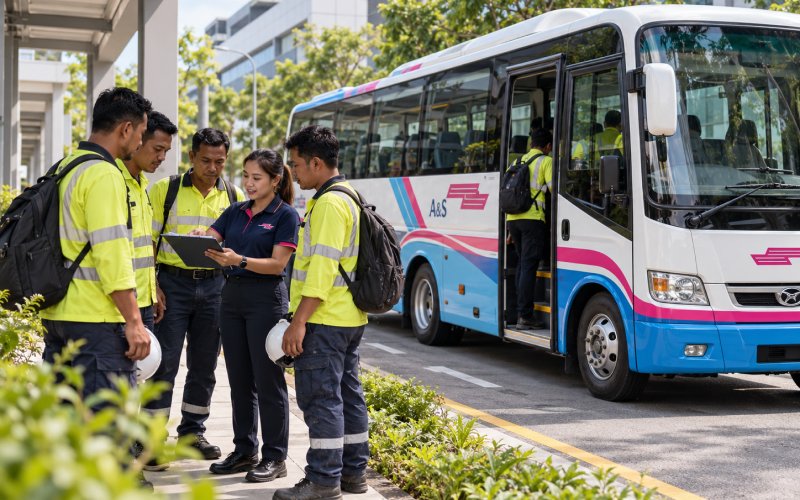
For us, workforce transit analytics are useful when they inform practical transport decisions. Repeated overcrowding before a shift calls for a capacity review; long waits at pickup points warrant checking departure times; shifting pickup demand may justify rebalancing stops. We also consider site access and realistic boarding allowances.
Here, worker movement data supports practical fleet planning when confirmed against rosters and actual deployment. A shuttle bus rental arrangement that suits one location may need to change when teams move to another site. We would assess passenger numbers, departure windows and vehicle capacity rather than assume a pattern explains an employee’s behaviour.
Our Approach to Worker Movement Data at A&S Transit
Our role is to turn the transport details you can share into workable service requirements. We discuss the operating purpose, validate expected passenger demand and account for changes in shifts or work sites. Just as importantly, we encourage proportionate use of information rather than collecting personal details simply because they are available.
About A&S Transit
A&S Transit has served Singapore’s passenger transport industry for over 30 years. With more than 100 buses, including 10-, 19-, 40-, and 45-seater options, we offer recurring and customised arrangements across the island.
Contact us to discuss your pickup points, shift requirements and suitable fleet options.
Frequently Asked Questions
Route changes often raise questions about passenger records, timing and privacy.
1. How many weeks of boarding records should we review?
There is no fixed number of weeks. Review enough comparable operating weeks to cover your usual shift patterns, including busier periods and temporary changes. This helps avoid decisions based on isolated fluctuations.
2. Can we plan routes without tracking individual employees?
Often, yes. Stop-level totals and reporting times may be sufficient, depending on your operational requirements.
3. Should temporary site assignments change our bus schedule?
Only after confirming passenger numbers, assignment dates and whether the change affects existing stops or vehicle capacity.
4. Do late boarding records prove someone was late for work?
No. Traffic, pickup arrangements and the difference between boarding and reporting times all require context.
5. What should we prepare before discussing a transport arrangement?
Bring estimated passenger numbers, shift timings, pickup locations, destination details and access restrictions. We can then discuss a workable arrangement for your next operating period.